
Custom Orthotics for Plantar Fasciitis: How They Help, What the Process Looks Like and How Long Until Relief
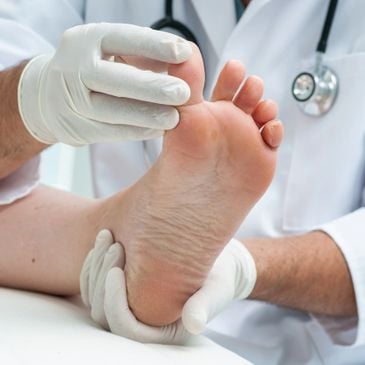
Custom orthotics can help plantar fasciitis by supporting your arch and spreading pressure more evenly across the bottom of your foot, which takes strain off the sore tissue. They are not a quick fix, and they work best alongside stretching and good shoes. Many people notice gradual improvement over weeks rather than days. Here is how they work, what the process looks like at our Skokie and Whiting offices, and what to expect along the way.
Why plantar fasciitis keeps coming back
The plantar fascia is a thick band of tissue that runs from your heel bone to the base of your toes and supports your arch. Johns Hopkins Medicine describes plantar fasciitis as irritation and inflammation of that band. The American Academy of Orthopaedic Surgeons notes it is one of the most common causes of pain on the bottom of the heel, and that it develops when too much pressure damages the tissue.
That last part explains why it can return. Every step pulls on the fascia. If the real problem is how your foot carries your weight, such as a flatter arch, a foot that rolls inward, or long days on hard floors, the strain keeps coming back even after the pain settles. Rest can calm a flare-up, but it does not change the load your foot sees once you are back on your feet. If you are in the middle of a flare-up right now, our guide to calming a plantar fasciitis flare-up covers what to do first. Waking up with stabbing heel pain? See sharp heel pain in the morning.
How custom orthotics take stress off the plantar fascia
Orthotics are shoe inserts that support the foot and help correct imbalances in how it moves. The American Podiatric Medical Association lists shoe inserts and orthotic devices among the early treatments for heel pain because they support the foot and address those imbalances. A custom orthotic is made from the shape of your own foot, so the support sits where your arch actually is, not where an average arch would be.
In plain terms, a well-fitted orthotic can:
- Hold your arch in a more supported position, so the fascia is not stretched as far with each step
- Spread pressure across the whole sole instead of letting it concentrate at the heel
- Help your foot move in a steadier, more efficient way when you walk or stand
It is worth being honest about the research. The StatPearls clinical review says supportive footwear and contoured foot orthoses can help manage plantar fasciitis, while noting that more research is needed. In other words, orthotics are a well-accepted tool, not a guarantee, and the right device depends on your foot. Our post on custom orthotics vs. store-bought inserts explains when each makes sense.
Who is a good candidate, and when other treatments come first
Custom orthotics tend to be most worth considering when:
- Heel pain keeps returning or has not improved with stretching and supportive shoes
- You have flat feet, high arches, or another foot shape that generic inserts do not fit well
- You are on your feet for work, or you run or play sports
- Heel pain is paired with other problems such as pressure spots, or knee, hip or back strain linked to how your feet move
Orthotics are not always the first step. American Family Physician explains that rest, activity changes, ice and stretching can be tried for several weeks first, with orthotics an option if heel pain persists. If your pain is new and mild, that is a sensible place to start. If it is severe, or it came on after an injury, have it checked sooner rather than later.
What happens at Opensky Podiatry
Getting orthotics here starts with figuring out why your heel hurts, not just taking a mold. Here is what your visits typically involve:
- Exam. Dr. Opensky examines your foot, finds where it is tender, and talks with you about when the pain happens, such as first steps in the morning or after long periods standing. If needed, we can use in-office X-ray and ultrasound.
- Foot and gait assessment. We look at how you stand and walk, and review the shoes you wear most. Read more about what happens during a gait analysis.
- Casting or scanning. If custom orthotics are the right fit, we take a precise mold or scan of your feet. Orthotics are then made from that shape and the problem being treated.
- Fitting. At a fitting visit you try them in your shoes. If anything feels off, we fine-tune them, and we check in at follow-up visits.
You can see the full overview on our custom orthotics page, or the specifics of our heel pain and plantar fasciitis care.
How long until relief, and what the break-in period feels like
Nobody can promise an exact date, and plantar fasciitis often improves slowly. What we can tell you is what the first weeks usually look like. New orthotics feel different, since they are changing how your foot is supported. Most people wear them for a few hours a day at first and build up over a week or two. Mild arch awareness or a feeling of being a little "propped up" can be part of getting used to them. Sharp pain, rubbing, or soreness that does not ease is not something to push through. Tell us and we will adjust them.
As for relief, think in weeks to months, not days. American Family Physician reports that about 90% of patients improve with conservative treatment, which includes more than orthotics alone. Your own timeline will depend on how long you have had the pain, your activity, and how consistent you are with the rest of your plan.
Using orthotics with stretching, supportive shoes and other care
Orthotics work best as one part of a plan. Pair them with:
- Stretching for the calf and the arch, as your podiatrist shows you
- Supportive shoes with a firm sole and good arch support. Orthotics need a shoe that can hold them, and worn-out shoes undo a lot of their benefit
- Activity changes, such as easing back on running or standing for long stretches while the tissue settles
- Other treatments when needed, such as shockwave therapy or cortisone injections, which we discuss with you if the basics are not enough
When plantar fasciitis needs more than orthotics
See a podiatrist if your heel pain lasts more than a few weeks, keeps coming back, gets worse, or starts to change how you walk. Seek care promptly if you cannot put weight on your foot, or if you notice swelling, redness, numbness, or you have diabetes or poor circulation.
Surgery is rarely needed. The American Podiatric Medical Association says most heel pain is treated with conservative care, and only a relatively small number of cases need surgery. StatPearls describes surgical referral as a last resort. If conservative treatment has not worked after a good trial, we will talk through all the options with you, including whether surgery makes sense.
Cost and insurance
Orthotics are a custom-made medical device, so we would rather you know your options before you are fitted. We accept 200+ insurance plans, but coverage for orthotics varies by plan. Our team can help you check your benefits ahead of time. You can see the plans we work with on our insurance page, or call 708-747-8994 with your questions.
Common questions
Will custom orthotics cure my plantar fasciitis?
They are designed to reduce the strain that keeps irritating the fascia, which can ease symptoms and help prevent repeat flare-ups. No treatment is guaranteed, which is why we pair them with stretching, footwear changes and follow-up.
Do I need custom orthotics, or will a store-bought insert do?
For mild, recent heel pain, a supportive over-the-counter insert is a reasonable first step. Custom orthotics make more sense when pain persists or your foot shape needs something a generic insert cannot provide.
Can I wear them in every shoe?
They are made around the shoes you wear most. Athletic and everyday shoes work best, and some dress shoes can take a slimmer device.
How long do they last?
It depends on the materials, your activity and how often you wear them. We check them at follow-up visits and tell you when they need to be refurbished or replaced.
The bottom line
If heel pain keeps interrupting your day, your body is asking for help. Don't ignore the pain. Custom orthotics can be a helpful part of care built around you, along with stretching and supportive shoes. Call 708-747-8994 or book an appointment today at our Skokie, IL or Whiting, IN office, and let us take a look.
Sources
- Plantar Fasciitis. Johns Hopkins Medicine. hopkinsmedicine.org
- Plantar Fasciitis and Bone Spurs. OrthoInfo, American Academy of Orthopaedic Surgeons. orthoinfo.org
- Heel Pain. American Podiatric Medical Association. apma.org
- Diagnosis and treatment of plantar fasciitis. American Family Physician, via PubMed, National Library of Medicine. pubmed.ncbi.nlm.nih.gov
- Plantar Fasciitis. StatPearls Publishing, NCBI Bookshelf, National Institutes of Health. ncbi.nlm.nih.gov
This article is for general education and is not medical advice. If you have heel or foot pain that isn't getting better, or you have diabetes or poor circulation, see a podiatrist or your doctor.