
Bunion Treatment in Skokie & Whiting
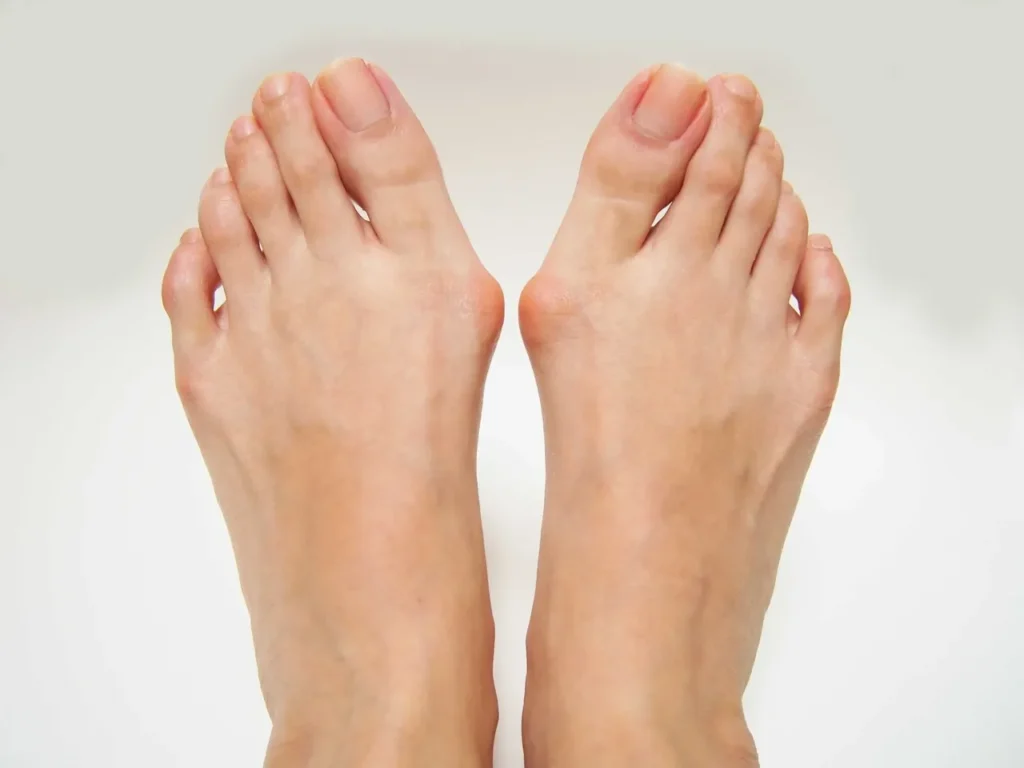
A bunion, also known as hallux valgus, is a painful bony bump that develops on the inside of the foot at the big toe joint. The big toe often bends towards the other toes and the joint becomes red and painful. Bunions develop slowly as pressure on the joint at the base of the big toe causes the toe to move out of place, leaning inward toward the second toe. Complications may include bursitis or arthritis.
Bunions are a common foot issue, and women are more likely to develop them, largely due to the types of shoes they tend to wear, such as high heels or narrow-toed footwear. These types of shoes can place excess pressure on the toes and contribute to the misalignment of the joint at the base of the big toe, leading to bunions over time.
In addition to footwear, genetics plays a significant role in the development of bunions. If someone has a family history of bunions, they’re more likely to develop them as well. Arthritis, particularly inflammatory types like rheumatoid arthritis, can also contribute to the formation of bunions, as it affects the joints and can lead to misalignment or deformities.
A bunion is a bony bump that forms on the joint at the base of your big toe. It occurs when some of the bones in the front part of your foot move out of place. This causes the tip of your big toe to get pulled toward the smaller toes and forces the joint at the base of your big toe to stick out. The skin over the bunion might be red and sore.
Wearing tight, narrow shoes might cause bunions or make them worse. Bunions can also develop as a result of the shape of your foot, a foot deformity or a medical condition, such as arthritis.
Smaller bunions (bunionettes) can develop on the joint of your little toe.

Bunion When you have a bunion, the tip of your big toe shifts towards the smaller toes, crowding them. This also forces the joint at the base of your big toe to stick out.

Bunionette Small bunions or bunions near the outside of your foot are (bunionettes) and can develop on the joint at the base of your little toe. Treatment varies from conservative to surgical depending on the severity of condition, you should refer your questions to a doctor because not everyone is a candidate for surgical treatment. Learn more about bunion surgery and custom orthotics.