
Custom Orthotics vs. Store-Bought Inserts: How to Choose
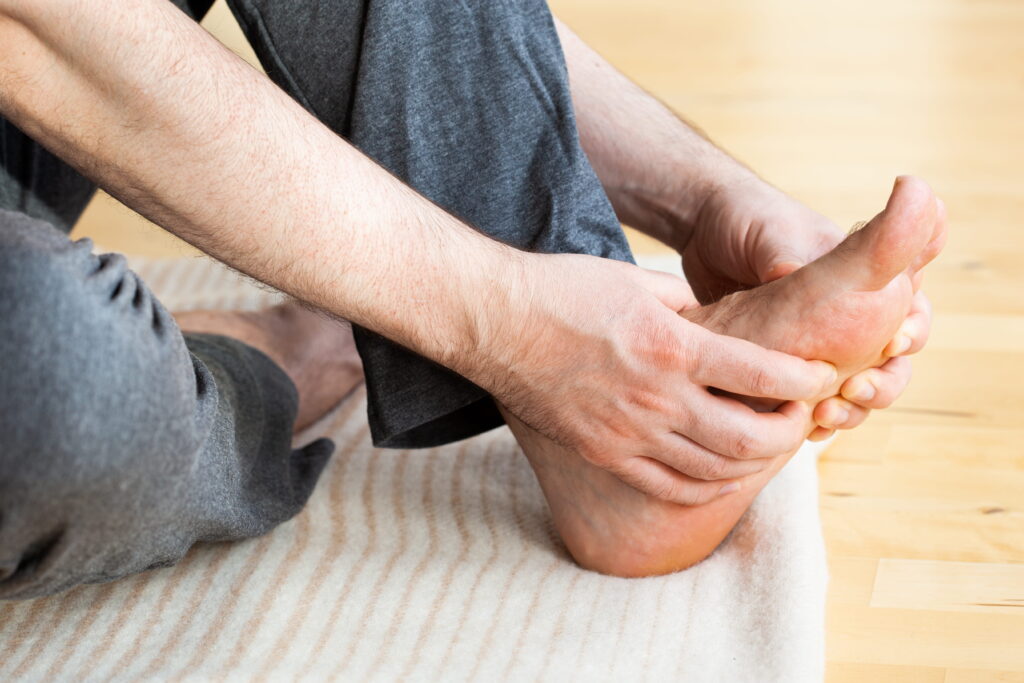
Walk into any pharmacy and you’ll find a wall of shoe inserts promising to fix sore feet. At the same time, many people hear from a doctor or a friend that they need custom orthotics. So which do you actually need? The honest answer: it depends on what’s causing your pain. Here’s how the two compare, what the research says, and how to decide.
What’s the difference?
Store-bought inserts (also called over-the-counter or prefabricated insoles) are made in standard sizes for an average foot. Some add cushioning, some add arch support, and some do a little of both.
Custom orthotics are prescription devices made from the shape of your own feet. According to the American Podiatric Medical Association, they’re made only after a podiatrist evaluates your feet, ankles and legs, so the device fits your foot structure and the problem being treated. The Cleveland Clinic explains that the provider makes a plaster mold, a foam impression or a 3D scan of your feet to build them.
What the research says
For one of the most common reasons people try inserts, heel pain from plantar fasciitis, the evidence is clear that support helps, but custom isn’t always better. A review of 20 studies described by Harvard Health Publishing found no difference in short-term pain relief between custom-made and store-bought orthotics for plantar heel pain.
That doesn’t mean custom orthotics are a waste. It means that for a straightforward problem, a good off-the-shelf insert is a reasonable first step. Custom devices earn their cost when your foot needs something a generic insert can’t do.
When a store-bought insert is a reasonable first step
- Mild arch or heel soreness after a long day
- Pain that started recently and isn’t severe
- Shoes that are comfortable except for a lack of cushioning or arch support
- No diabetes, circulation problems or loss of feeling in your feet
Look for an insert with a firm, supportive arch rather than soft gel alone, and replace it when it flattens out. If your pain isn’t clearly better after a few weeks, it’s time for an evaluation.
When custom orthotics are worth it
- Pain that hasn’t improved with good shoes and a store-bought insert
- Flat feet, high arches or other foot structure that generic inserts don’t fit
- Pressure spots from bunions, hammertoes or calluses that need targeted relief
- Diabetes or poor circulation, where pressure in the wrong place can lead to sores (see our diabetic foot care page)
- Running or sports injuries that keep coming back (we also make sports orthotics)
- Knee, hip or back strain linked to how your feet move
The Cleveland Clinic notes that custom devices cost more but last much longer than over-the-counter versions, which can even out the cost over time.
What a custom orthotic visit looks like
At Opensky Podiatry, getting orthotics starts with figuring out why your feet hurt. Dr. Opensky examines your feet, watches how you stand and walk, and looks at the shoes you wear most. If custom orthotics are the right fit, he takes a precise mold or scan of your feet. At a fitting visit, you try them on, and we fine-tune them if anything feels off. Most people build up wear over a week or two.
Curious what happens when we watch you walk? Read what happens during a gait analysis.
Common questions
Can I just try a store-bought insert first?
For mild pain and no other health concerns, yes. If it doesn’t help within a few weeks, or the pain is getting worse, see a podiatrist.
Do custom orthotics work in every shoe?
They’re made for the shoes you wear most. Athletic and everyday shoes work best; some styles of dress shoe can work with a slimmer device.
Does insurance cover custom orthotics?
It depends on your plan. Our team can help you check your insurance benefits before you’re fitted.
The bottom line
Start simple when the problem is simple. When pain lingers, your foot structure is unusual, or you have diabetes, a podiatrist can tell you whether a custom orthotic will do what an off-the-shelf insert can’t, and make one that fits your feet and your life. Dr. Opensky sees patients in Skokie, IL and Whiting, IN.
Sources
- Prescription Custom Orthotics and Shoe Inserts. American Podiatric Medical Association. apma.org
- Orthotics: Definition, Risks, Benefits, Types & Tips. Cleveland Clinic. my.clevelandclinic.org
- Custom orthotics appear no better than store-bought versions for heel pain. Harvard Health Publishing, Harvard Medical School. health.harvard.edu
This article is for general education and is not medical advice. If you have foot or ankle pain that isn’t getting better, or you have diabetes or poor circulation, see a podiatrist or your doctor.